
How and why I have spent decades researching the Jewish families from my hometown of Borken, Germany
Dear visitors and friends
Isabelle Couchman asked me to give some impressions of my work during the last decades, trying to find out what happened to all the Jewish families that lived in my hometown Borken.
My name is Mechtild Schöneberg. I was raised up in Borken, a town very close to the Dutch border. It is between Münster and the industrial area, 60 km to Münster and 60 km distance to Essen. It is still a small town, going back to the beginning of the 20th Century it has about 8000 inhabitants, about 100 of them were Jews in a total majority of Catholics.
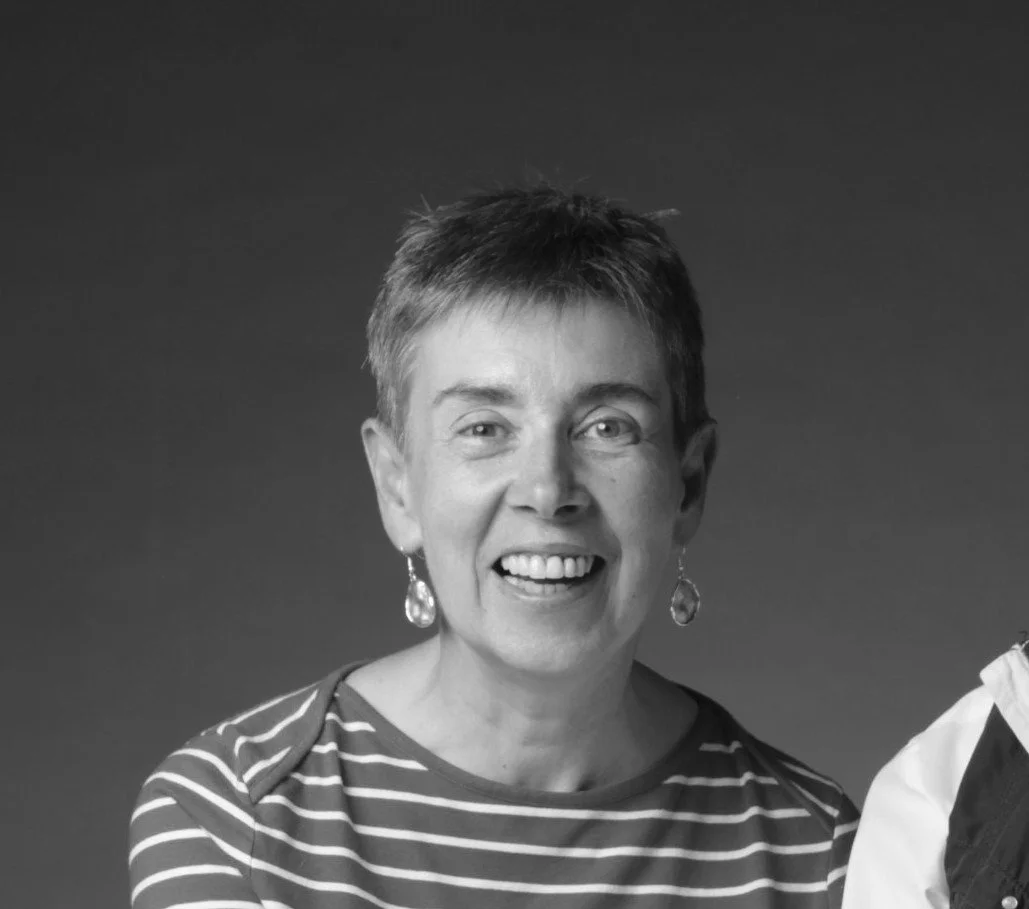
Mechtild Schöneberg
It was 1987 when I started Jewish research. I was a student and working on my thesis: “Borken and the catholic church in times of National socialism” when my professor asked me, if there was a Jewish community and how the Catholics behaved to this small group of inhabitants? So, I was the first person starting to find out addresses and getting in contact with family members.
Although I heard about the cruelty of the Shoah at school, it touched me much more, when I read about the victims and the history, that happened so close nearby. I saw the first pictures of victims – and I felt more than during all the lessons at school. It is my conviction till today, that is so important to put a face to all those who were murdered.
About ten people worked together with me, preparing an exhibition for the 50th anniversary of the Pogromnight 1988. The town Borken invited and more than 40 Jews came to visit their former hometown. It was such an emotional week. When I think back on it, I realise what it is that still keeps me going.
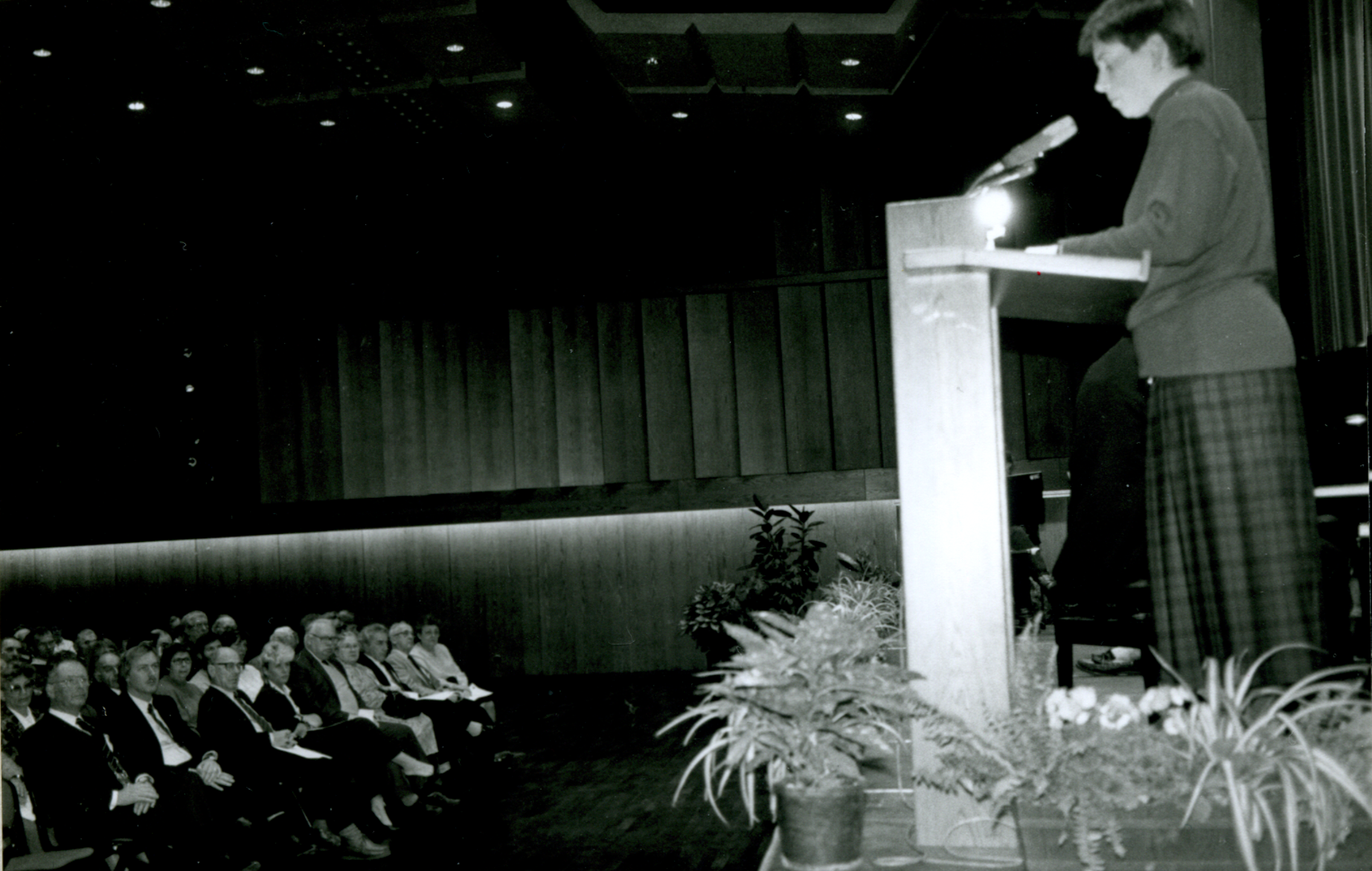
Presenting at the Exhibition in 1988
My colleagues and I started collecting everything about Jewish families in Borken and the two little towns nearby: Weseke and Gemen. So, we got a picture of a beautiful lady in her early twenties, taken by a Dutch photographer in our Dutch neighbour town Winterswijk. We asked who she was and got the information, it was Hannelore Frank, the only survivor of her family who lived in Weseke. Hannelores fate is tragic and it will lead us to far away from what I will tell you today. So, to keep it shorter. Hannelore didn’t want to get any contact to Borken-Weseke or Germany. Only one classmate was so close to her that both ladies stayed in touch by letters. This classmate trusted our group, and she gave us Hannelore’s address with the promise, not getting in contact.
It was 2001 or 2002 when I got an email from a man from Israel. He introduced himself as Dan Frank, looking for his cousin Hannelore Frank. I gave him the address, and he promised to keep our contact secret. During the years I heard from Hannelore and Dan said once, Hannelore was very ill. It was in this time, 2009, when a lady from Borken’s neighbour town reached me by phone.
She said, she was a girl and a witness, when Hannelore’s father Karl visited her mother in 1940. Karl explained that he had been ordered to leave the town with his family, not knowing what would happen to all of them. He brought some beautiful plates with and asked his former neighbour to take care of this. In case that he would survive, Karl would come back. But he never did. The lady searched for the Frank family after WW II, never found out, what happened. When she was old, she asked her daughter, the witness, to look for the family.

The beautiful plates that were safeguarded by the family of Frau Maria Strolka from Wesseke for 69 years in the hope that they would eventually find survivors from the Franck family, which they finally did in 2009 thanks to the researches by Mechtild. You can read in another post here, written by Carolyn Duclos about the impact it had on the Franck family when they received the plates “I just couldn’t believe the goodness of Frau Strolka and Mechtild”
The lady on the phone said, she was now in her seventies and going to leave her house for a senior’s residence. She was convinced that this duty should not go to the next generation and asked me for help. At once I wrote to Dan Frank. He answered quickly and said: “Listen, it is Yom Kippur – If not now, then when?” He gave me the address of Hannelore’s daughter Carolyn. I wrote her an email. Her answer was very reserved but we both decided to bring the plates back to the family. The parcel arrived in America, a few days, before Hannelore died.
I still have a photo, showing Carolyn and her youngest sister Stephanie, both presenting the plates. Caro and I stayed in contact, but I read during the lines, that it was very difficult to her, to come to Borken and visit me. In the end, it took five years. In 2015 Caro and her husband Tim came for a short visit to Borken. It was a very hot day. I showed some beautiful places to them and we visited Weseke, where the family once lived. Weseke was totally renewed in the 1970s, nothing remains in the old streets. I think, this helped a lot, to work with all the emotions, that my visitors experienced.
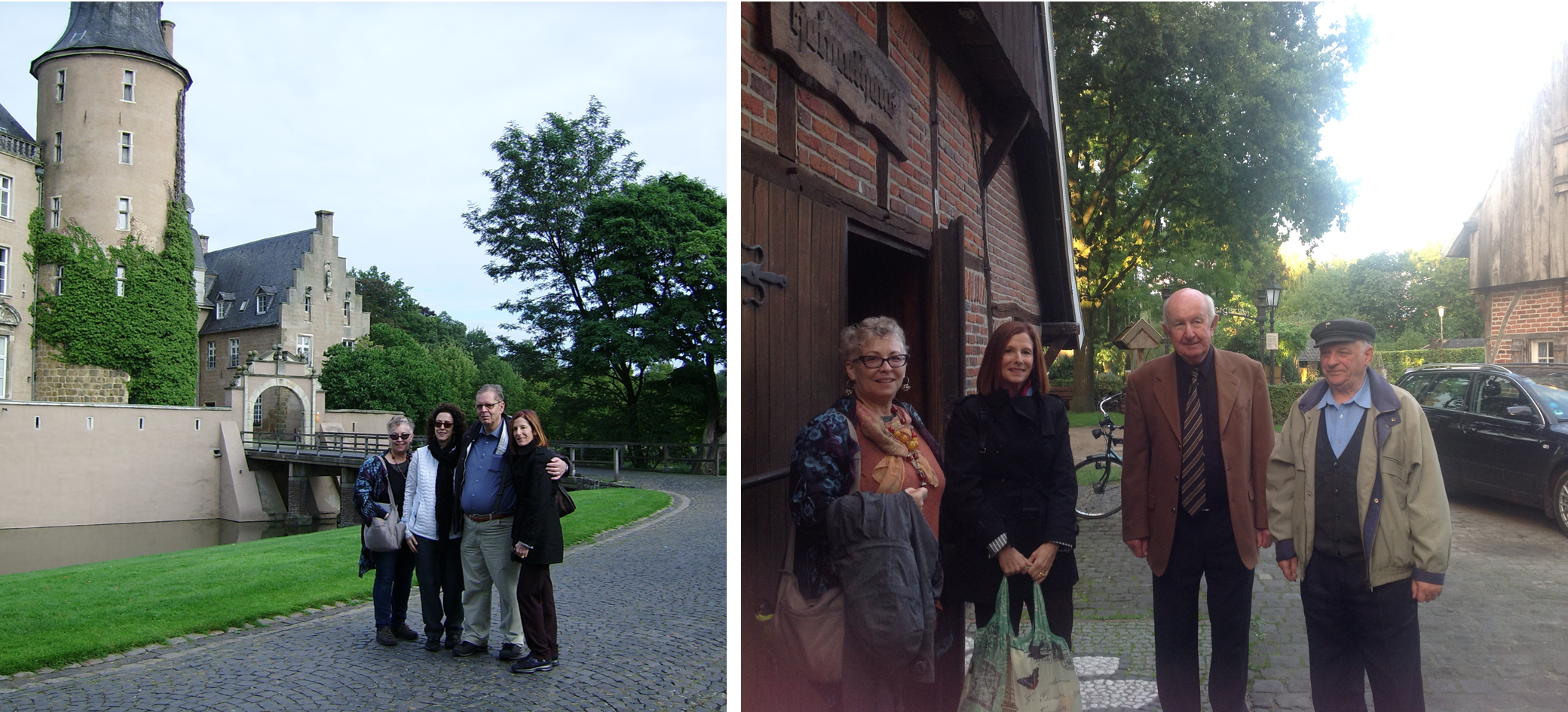
One year later Caro’s sisters Leslie and Stephanie visited Borken, too. In 2016 a monument near the church in Weseke was raised, named all the victims and explained their fate. Leslie touched the names of her family and said with tears in her eyes, “Now I can forgive Germany”. I hadn’t realised that forgiving also lifts a burden from the person who forgives; I always thought it was only a relief for the person who is forgiven.
This touched me very much. In this moment I understand how large the burden was, that they carried before. Therefore, I do all my research. I have the possibility to work in the archives, talk to colleagues working with Jewish history. Some of them in my district and me founded a network. Of course, some Dutch colleagues joined us! This is important, because in the past, not only during the time from 1933 to 1945, Jewish families also had relationships across the border.
My profession was to be a teacher my subject was politics. In my school years I met many pupil and we talked about the National socialism and how it could happen. For pupil it is a sometimes too big to understand, perhaps a form of guilty that raised in their families, and in some cases, they are critical because of fake news. But, what always found a way to their head was, when I described what happened to children, young people of their age, show pictures of normal beings, smiling, holding a hand of their father or mother. So, I fully agree with a prominent German person, Hape Kerkeling. He is a cabaret artist and he held a remarkable speech in Buchenwald a few weeks ago. He said: Ziehen wir einen Schlussstrich unter die Erinnerung, ist das der Schlussstrich unter die Demokratie. If we draw a line under the past, we are drawing a line under democracy.
This keeps me busy and I still love, what I’m doing. But what helps me most is, meeting people, looking in real faces, engaging in dialogue with people.
Yes, that’s what brought me here to Berlin. Thank you.