
Exactly five years ago – on 25 June 2021 – the German Nationality Act was amended so that many who had lost or were refused German citizenship due to Nazi persecution, and their descendants, were finally able to regain or obtain German citizenship. The theme of the series of events in Berlin on 24 and 25 June 2026 was therefore “Five Years On: Coming to terms with the past to build a better future.”
The events included:
A guided visit to the Bundestag; a meeting, speeches, music, and a reception hosted by the Alliance 90/Greens parliamentary group, who were instrumental in driving the amendment; and the honour of a private meeting with Omid Nouripour, Vice President of the German Bundestag.
A concert in the beautiful Heilig‑Kreuz‑Kirche — a venue that felt deeply appropriate, as it welcomes people of all faiths, provides daily practical care for refugees, and embodies a profound commitment to reconciliation.
A breakfast meeting with German politicians (MdBs) who had been deeply involved in bringing about the 2021 law change, together with applicants who had benefited from the new legislation and were attending the reconciliation events in Berlin.
Events at the Bundestag
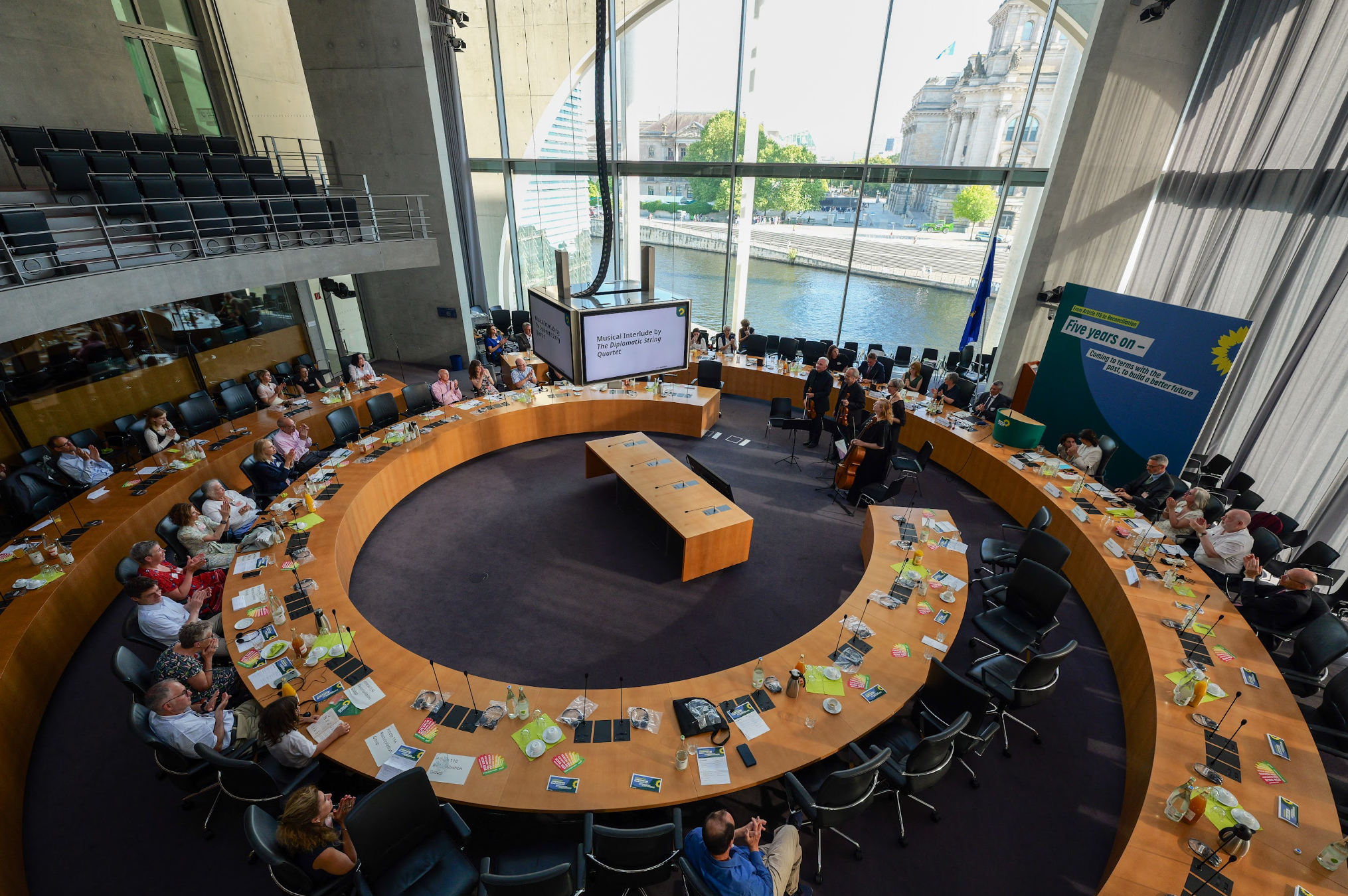
‘Five years on’ meeting at the Bundestag
We are immensely grateful to Fliliz Polat and all in the Allianz 90/Greens parliamentary group for organising such a special event for us. Their own account of the event is available (in German) here - and here is a translation in English with some added photographs.
“For the third time, the Green Party parliamentary group in the Bundestag had the honor of welcoming descendants of survivors of the Nazi regime to the German Bundestag—descendants who had been stripped of their German citizenship in the 1930s. The occasion was the reform of citizenship law, which for the first time granted the descendants of Holocaust survivors a legal right to German citizenship and had come into effect five years earlier.
The guests of honour—a group of members from the Article 116 Reconciliation Project, an initiative of descendants of those persecuted by the Nazis that had played a key role in advocating for the legal reform—were first warmly welcomed by Bundestag Vice President Omid Nouripour. This was followed by a moving program featuring speeches, a panel discussion, musical accompaniment, and distinguished guests to mark this important correction of historical injustice.”
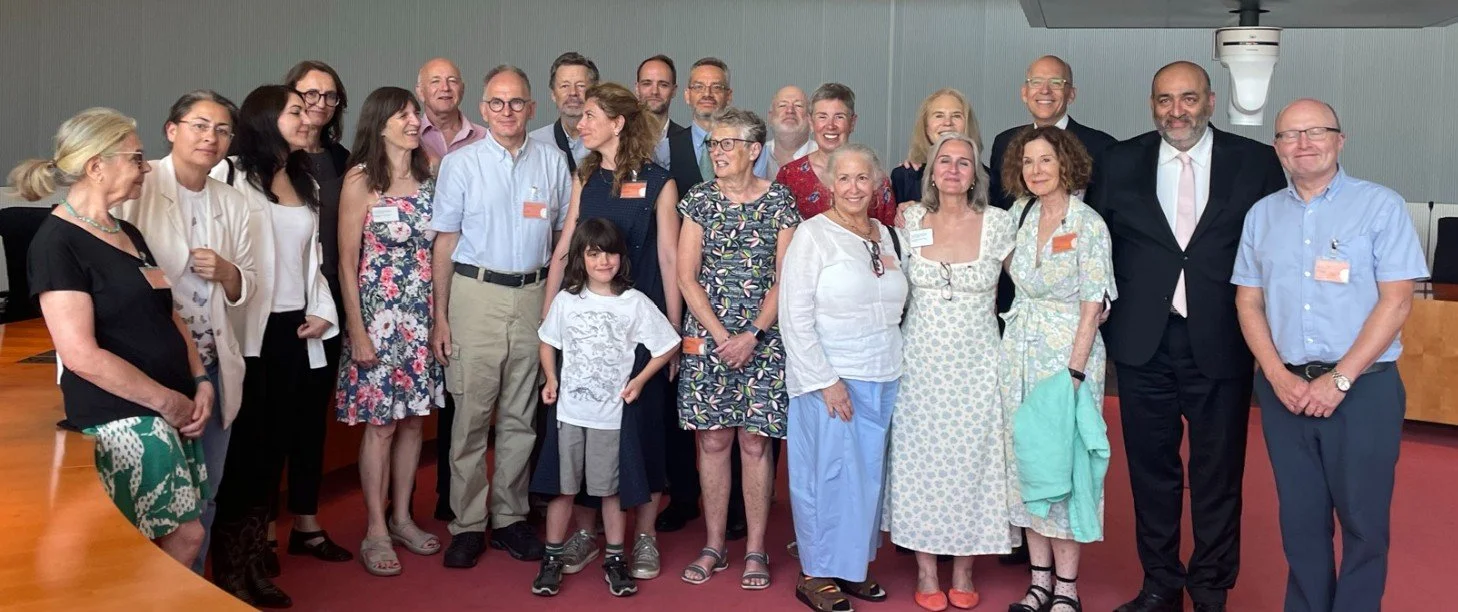
Meeting Omid Nouripour, the Vice President of the Bundestag (second from the right)
“Filiz Polat, Parliamentary Secretary of the Green Party’s Bundestag caucus, served as the evening’s MC. She has been a key advocate for the reform of citizenship law and paid tribute to the long-standing commitment of the Article 116 Reconciliation Project, whose members had played a decisive role in the reform’s success.
Britta Haßelmann, the parliamentary group chair, delivered a moving opening address in which she described the reform as a lasting reminder. She emphasized that justice and redress are among the central tasks of the German Bundestag.”
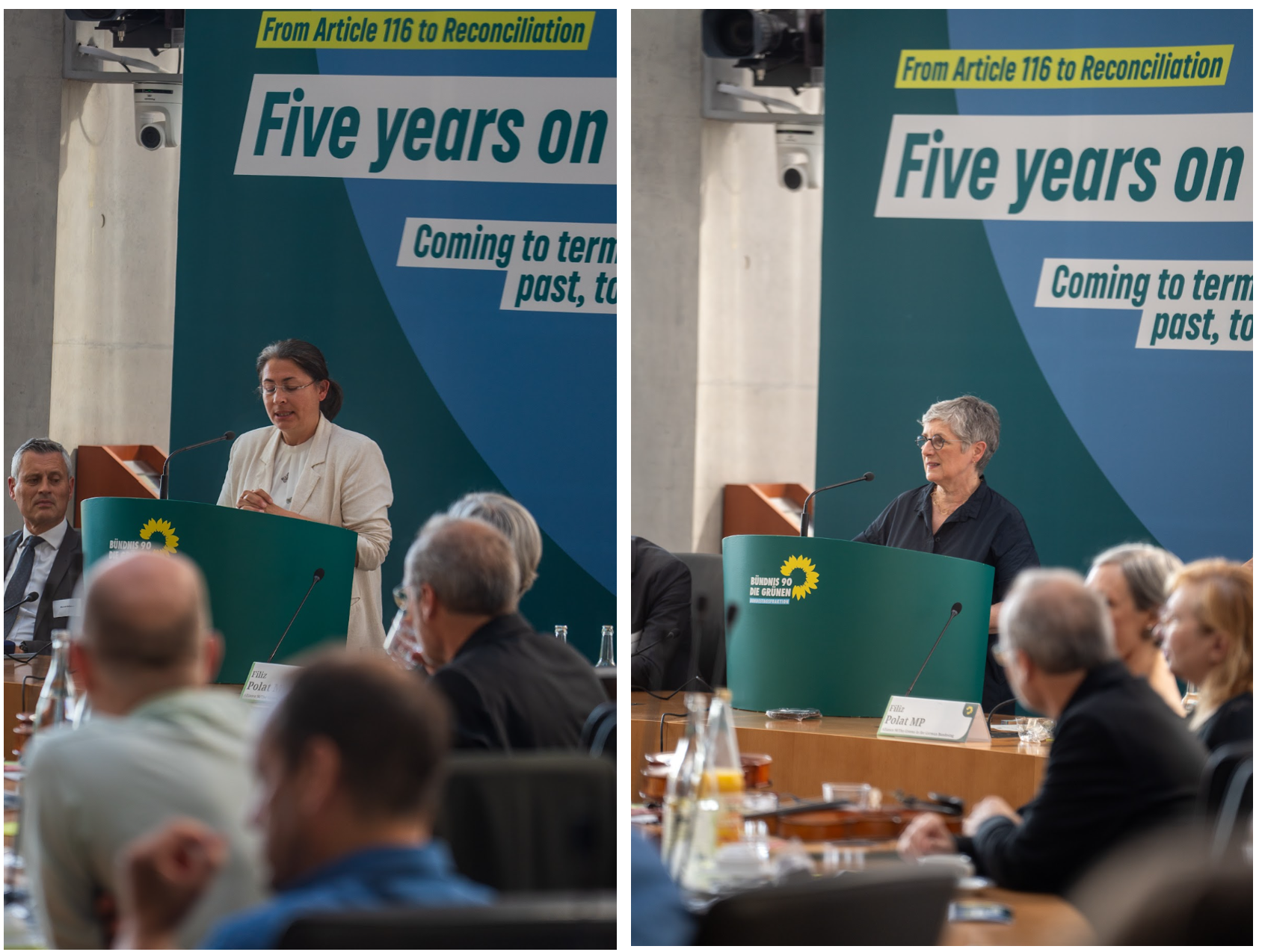
Filiz Polat and Britta Haßelmann
“Bundestag Vice President Omid Nouripour addressed his remarks specifically to the Jewish guests. He assured them of his support and reaffirmed the goal of doing everything possible to ensure that Jewish life in Germany is safe.
Isabelle Couchman, co-founder of the Article 116 Reconciliation Project, also delivered a speech. She drew attention to the perspective of those who have decided to accept German citizenship. For many, she said, the moment of naturalization signifies the recognition of their rightful place as German citizens.”
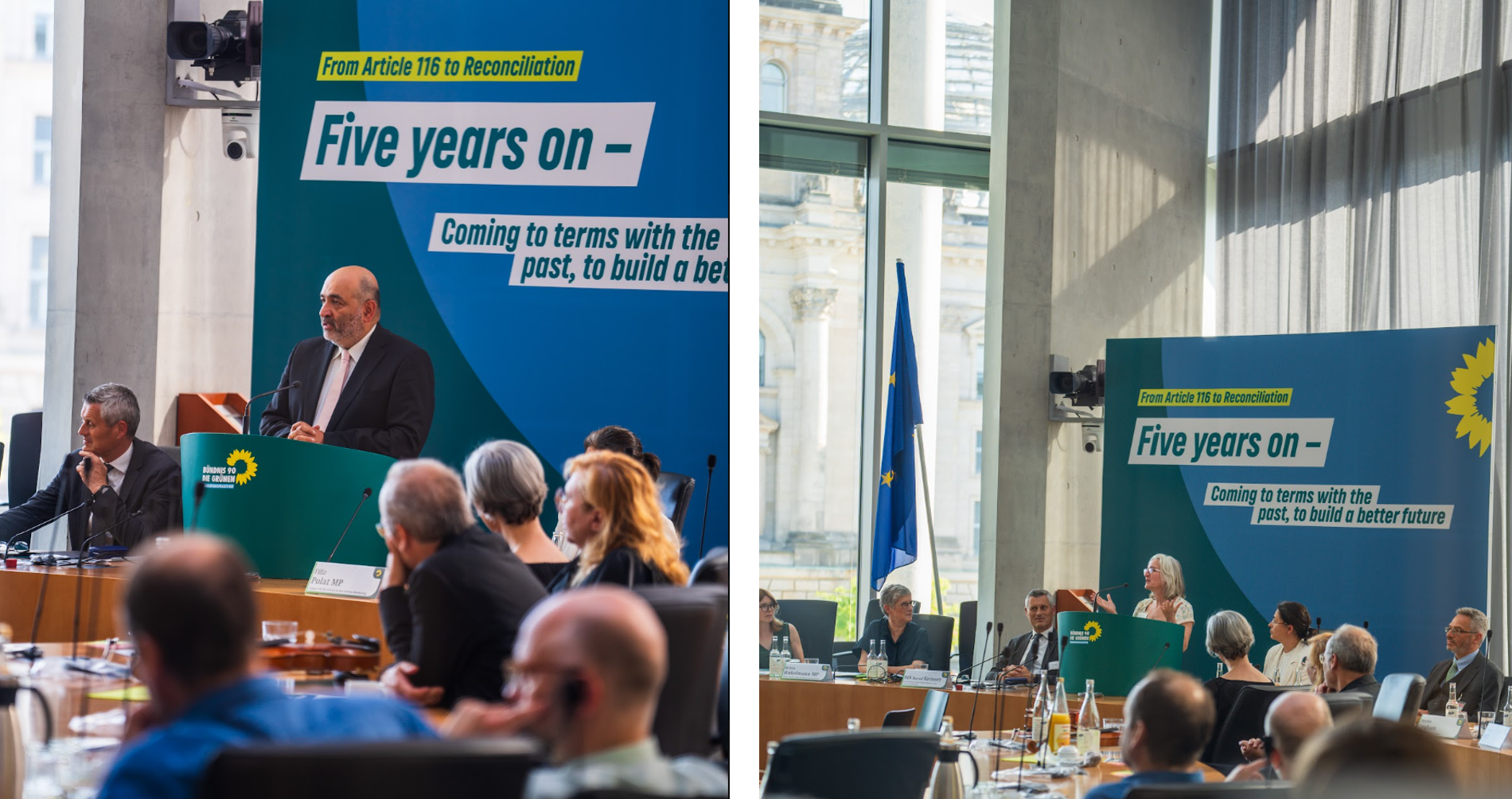
Omid Nouripour and Isabelle Couchman
“Particularly moving were the personal accounts shared by Thomas L. (“Tad”) Kelly and Bernie Graham, who are also members of the Article 116 Reconciliation Project.
Tad Kelly, one of the project’s founders, has been working on issues of reconciliation in the United States for many years. His mother-in-law, Ursula Kantor, was granted German citizenship on her 88th birthday. Although she considered herself German and German was her native language, she had been unable to obtain German citizenship until the law was amended because she was from Danzig. Sadly, she passed away just one month later.
Bernie Graham was initially denied a German passport because, although his parents were born in Germany, they had never been German citizens. Four years ago, after a three-year wait, he was granted citizenship. The 2021 BBC documentary series “My Family, the Holocaust, and Me” explores his mother’s family’s experiences of the Holocaust.”
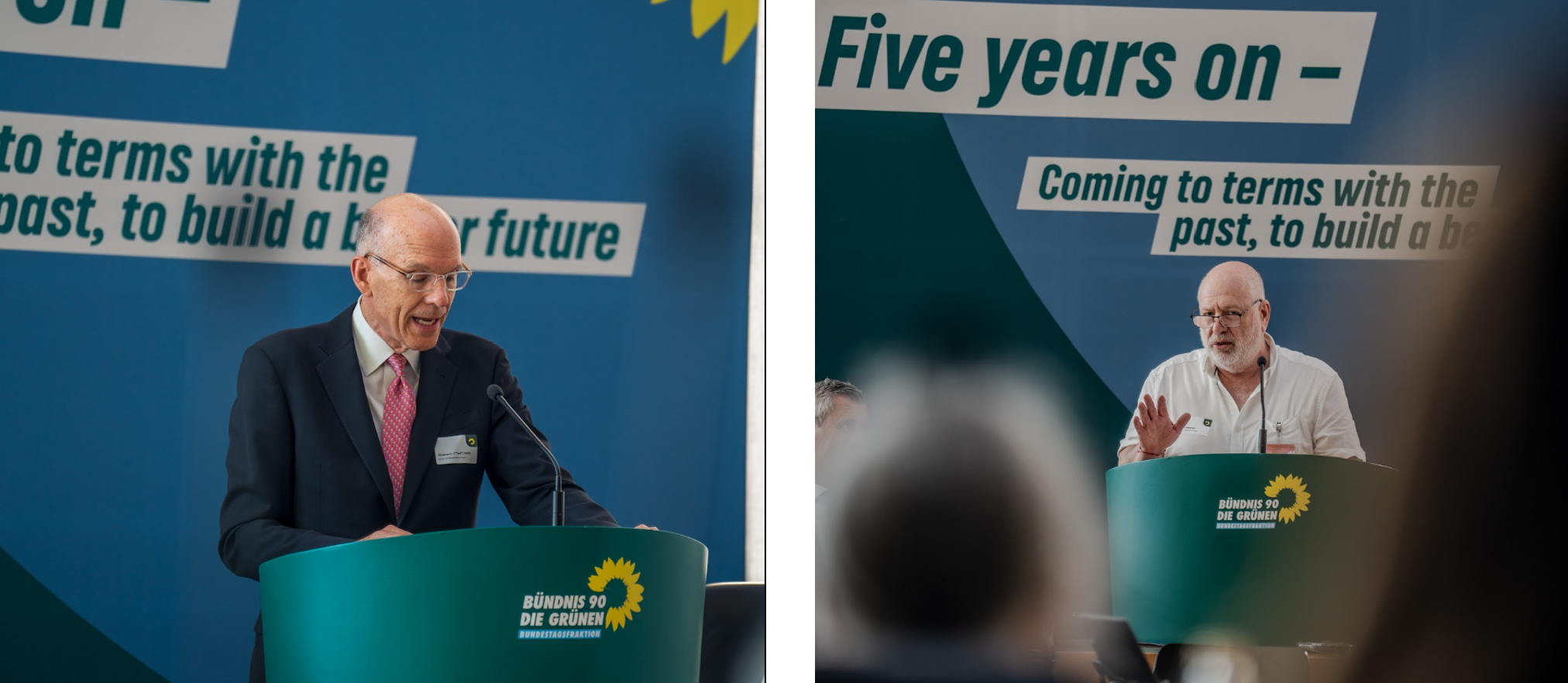
Tad Kelly and Bernie Graham
“The speeches were followed by a panel discussion on the practice of naturalization, featuring Felix Couchman, founder of the Article 116 Group, and State Secretary Bernd Krösser from the Federal Ministry of the Interior. The discussion focused on experiences with the process and the significance of the reform for those affected. State Secretary Krösser emphasized—as the speakers had done earlier—that it is an honour to restore German citizenship to people whose families had once lost it due to persecution.
Marlene Schönberger, the Green Party’s Bundestag caucus spokesperson on Jewish life, offered fitting closing remarks. She made it clear that the injustices committed during the Nazi era could never be fully redressed. However, she added, this makes it all the more important to end existing injustices and to take responsibility for the present and the future.
All of the evening’s speakers agreed: The reform cannot undo the injustices suffered. However, it makes an important contribution to acknowledging historical injustices and correcting their consequences, at least to a small extent.”
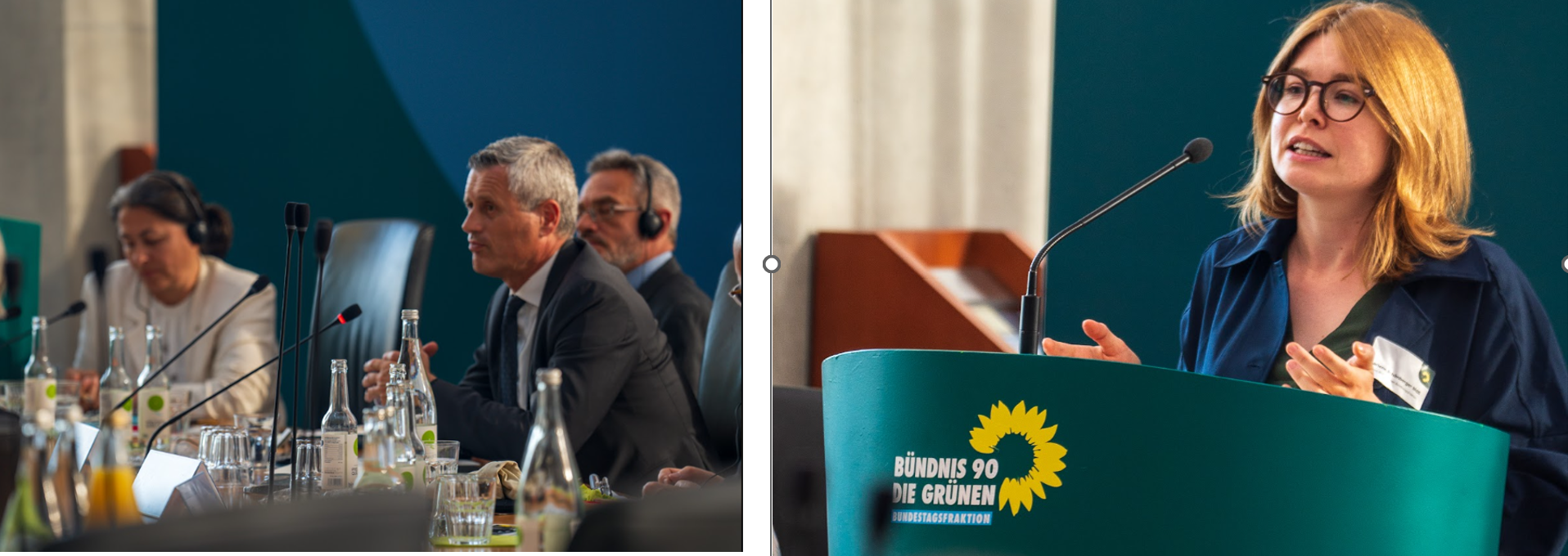
Filiz Polat, Felix Couchman, Bernd Krösser and Marlene Schönberger
“The moving speeches were accompanied by a musical program performed by the Diplomatic String Quartet, whose members include not only the Federal Government Commissioner for Anti-Semitism, Dr. Felix Klein, but also Matthias Hummel, Waltraut Elvers, and Tatjana Drujan. The program featured works by the Jewish composer Józef Wieniawski, Erich Wolfgang Korngold, Mieczysław Weinberg, Szymon Laks, and Leonard Bernstein.”
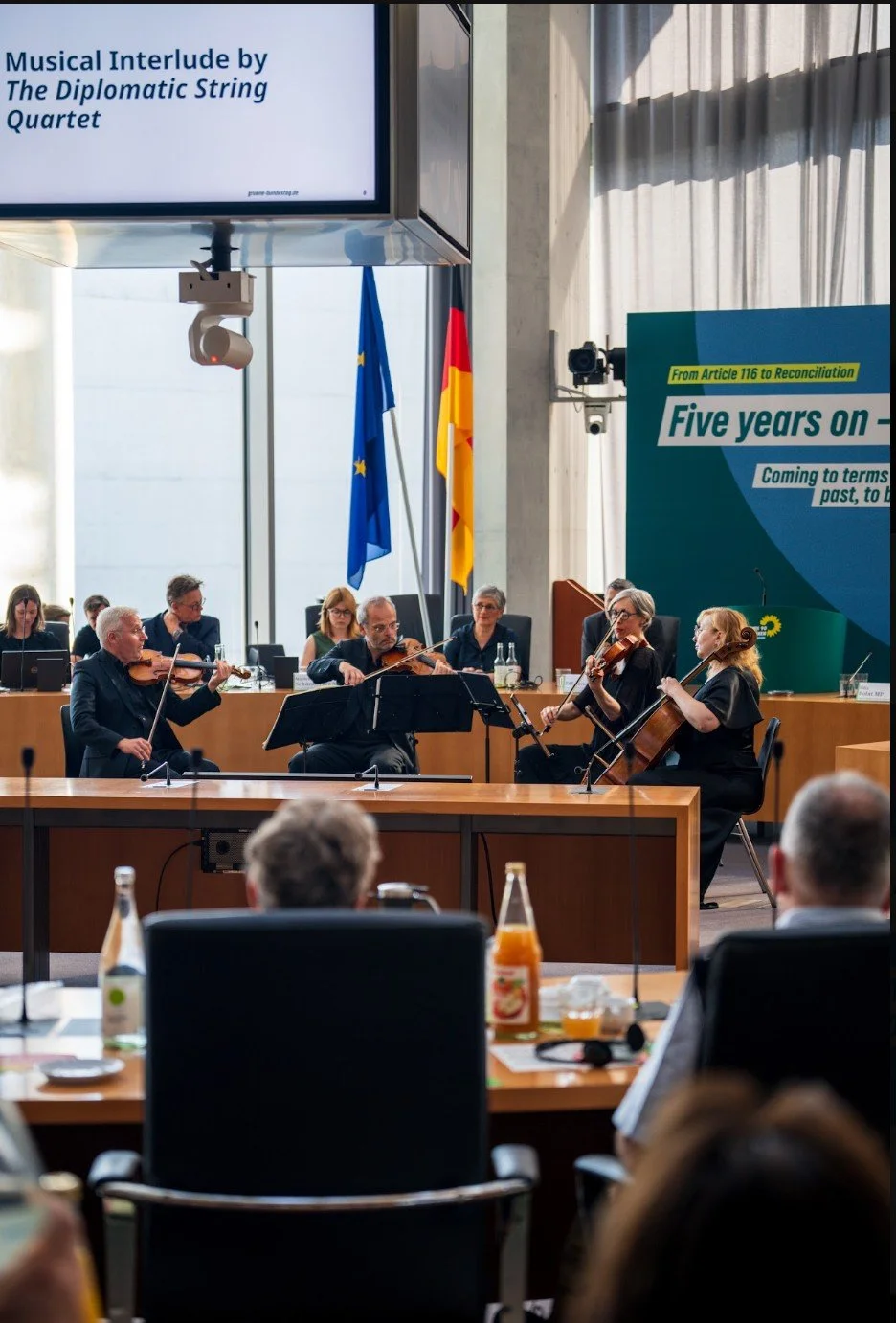
The Diplomatic String Quartet
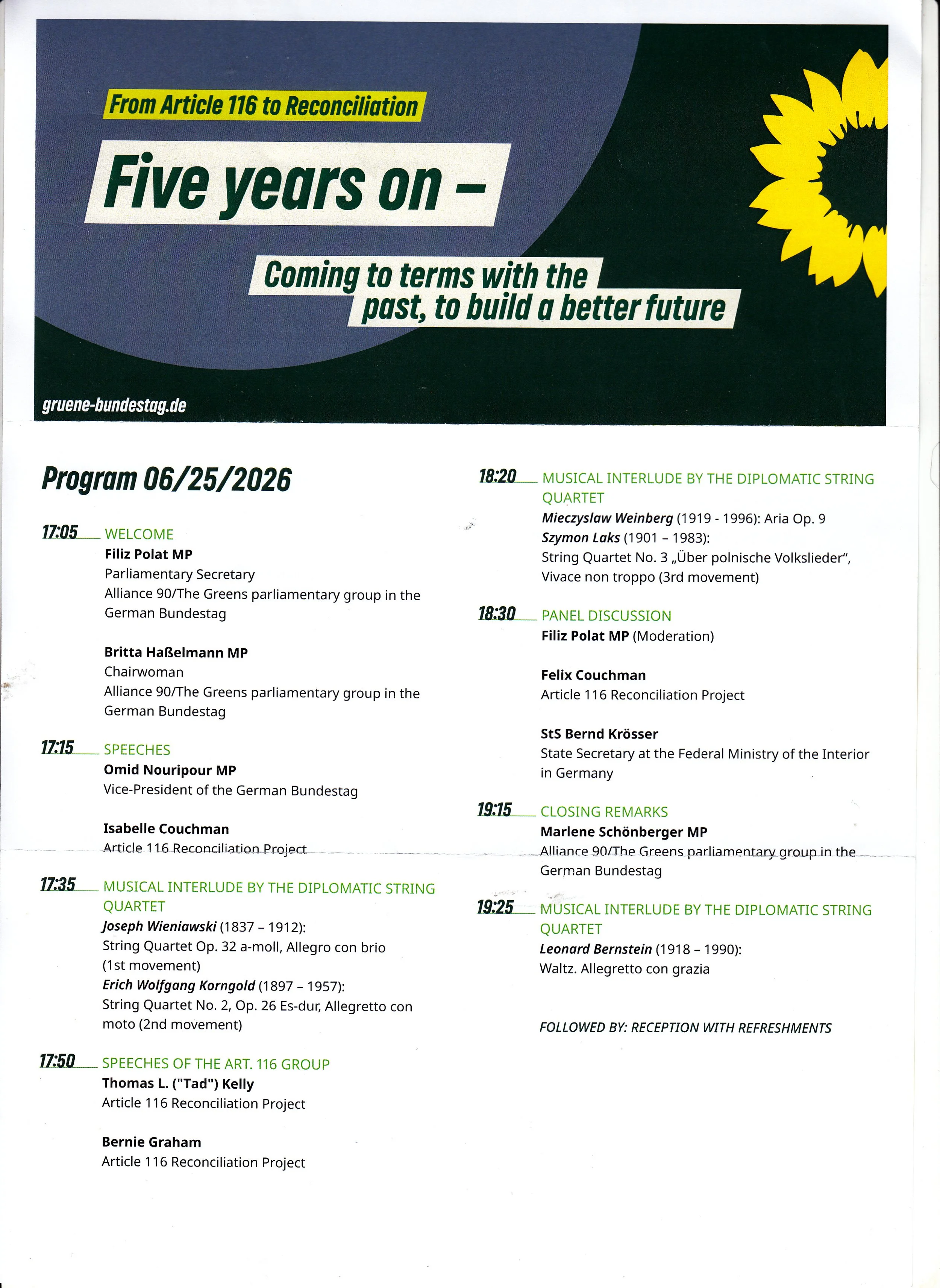
Event Programme
Concert at the Heilig-Kreuz-Kirche
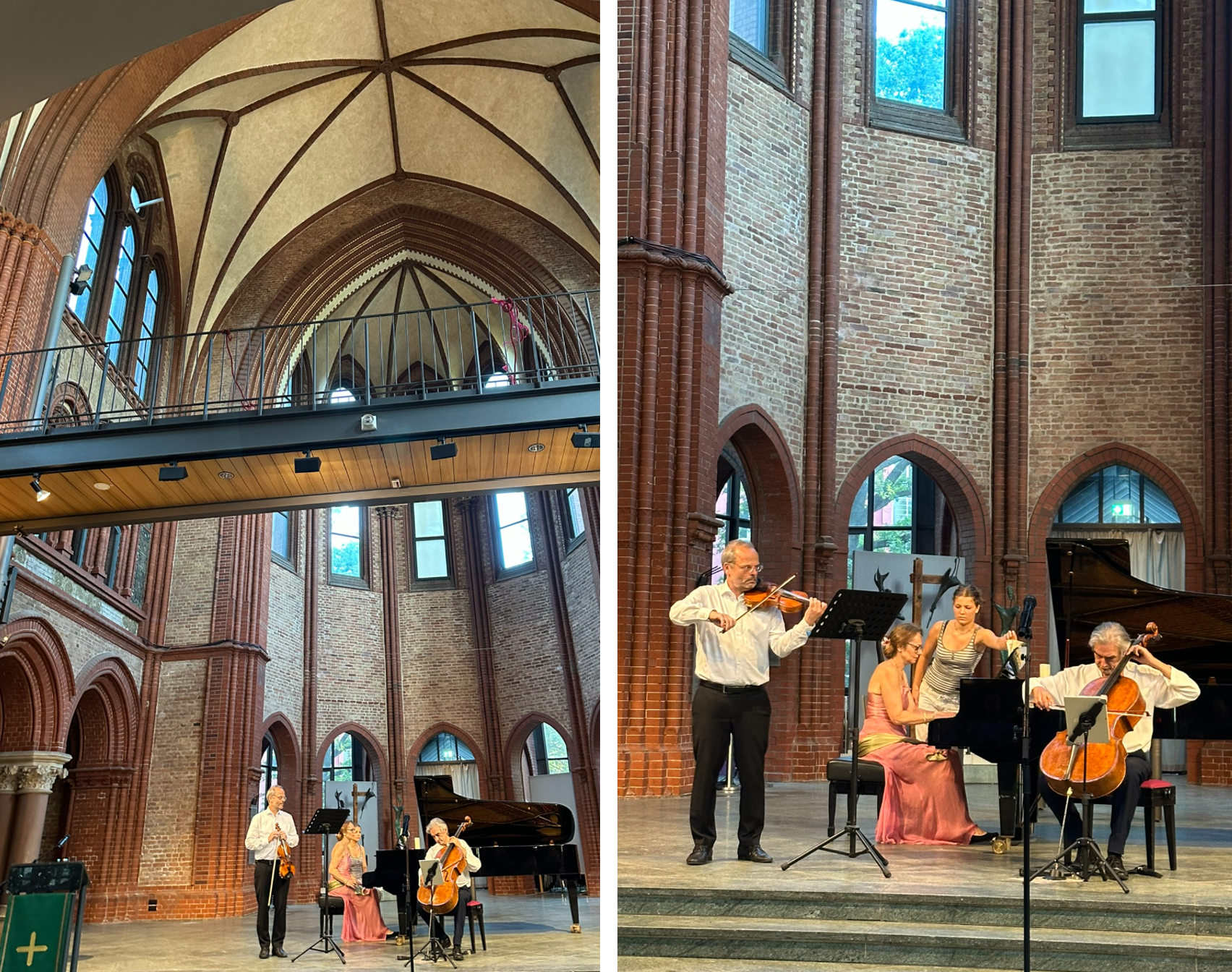
Felix Klein (violin), Heidemarie Wiesner (piano), Ramon Jaffé (cello)
It was very special to return to the beautiful and welcoming Heilig‑Kreuz‑Kirche for a concert, a place that opens its doors to all faiths, cares for refugees every day with compassion and practical support, and lives out a profound commitment to reconciliation. We were grateful once again to the superb musical trio comprising Dr Felix Klein, Federal Government Commissioner for Jewish Life in Germany and the Fight against Antisemitism, Heidemarie Wiesner, and Ramon Jaffé, who performed a moving programme of music by Jewish composers, including Felix Mendelssohn Bartholdy’s Piano Trio No. 1 in D minor and Lera Auerbach’s Piano Trio No. 2 (Triptych – This Mirror With Three Faces). The music was interspersed with speeches by Dominic Steinitz, Mechtild Schöneberg and Felix&Isabelle Couchman.
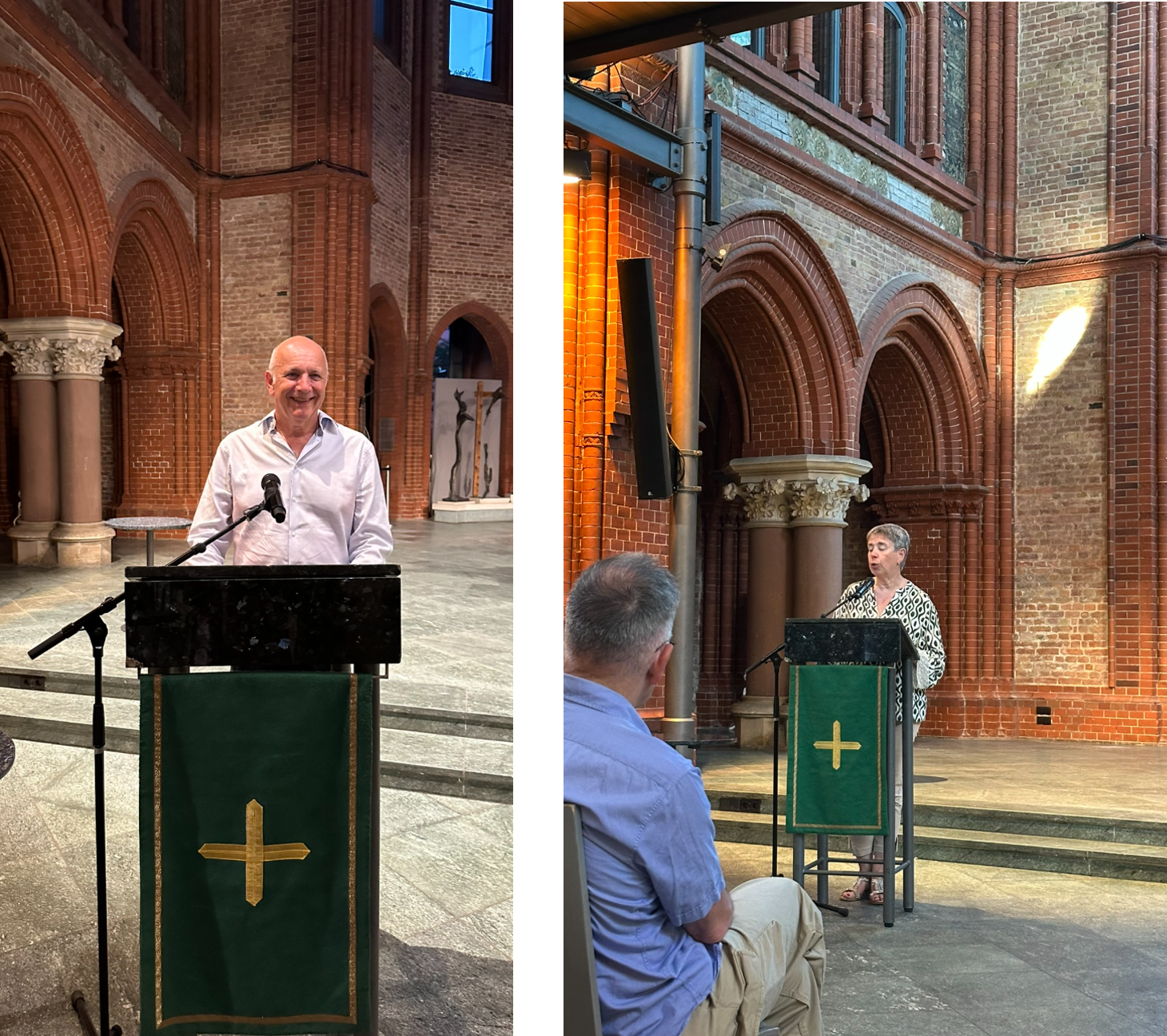
Dominic Steinitz and Mechtild Schöneberg